Botanical Insights & Industry News
Explore scientific advances, technical guides, and quality innovations in botanical extract manufacturing from Bio-Botanica experts.
Advanced Botanical Extraction & Quality Science
In-depth analysis of cold-extraction methods, bioactive preservation, and global standard compliance.
Nutraceutical & Cosmetic Ingredient Trends
Stay ahead with market perspectives on natural supplements, functional beverages, and organic personal care formulations.
China Top Cold Extracted Botanical Ingredients Manufacturers
Table of Contents
- Cold-Extracted Botanical Ingredients: Definition and Core Characteristics
- Cold Extraction Methods Used in Botanical Ingredient Production
- Key Standards for Evaluating Chinese Botanical Ingredient Manufacturers
- Major Product Categories and Industrial Applications
- China’s Leading Cold-Extracted Botanical Ingredient Manufacturers
- FAQS
- Conclusion
- Related Posts
China has become a significant sourcing base for Cold-Extracted Botanical Ingredients. Its advantages include diverse plant resources, mature processing capacity, and growing investment in quality systems. These strengths support applications in cosmetics, food, beverages, and wellness products.
Market evidence shows sustained global demand. Grand View Research’s 2024 Botanical Extracts Market report identifies expanding use in personal care, nutrition, and functional foods through 2030. Mordor Intelligence also reports rising demand for plant-based ingredients, supported by clean-label preferences and ingredient transparency. However, market estimates differ because research firms define “botanical extracts” differently. That detail deserves attention.
Cold extraction can help protect heat-sensitive compounds, natural color, and delicate aroma. Yet the method alone does not prove superior quality. Supplier evaluation should include botanical identification, extraction parameters, pesticide screening, heavy-metal testing, microbiological results, and batch-level certificates of analysis. Reliable manufacturers should also demonstrate traceability from farm or collection site to sealed drum.
China’s leading manufacturers increasingly provide standardized extracts, customized specifications, and documentation for international buyers. Strong suppliers commonly operate under GMP-based procedures and relevant ISO quality systems. Buyers should verify certifications directly, rather than relying only on marketing claims.
Small details matter.
A clean production room, stable powder flow, and clear lot coding often reveal operational discipline. Experience also shows that communication speed can affect project success as much as laboratory performance. This introduction examines China’s leading manufacturers through sourcing capability, extraction expertise, quality assurance, documentation, and export reliability. It also recognizes a practical limitation: no supplier is ideal for every botanical, market, or formulation.
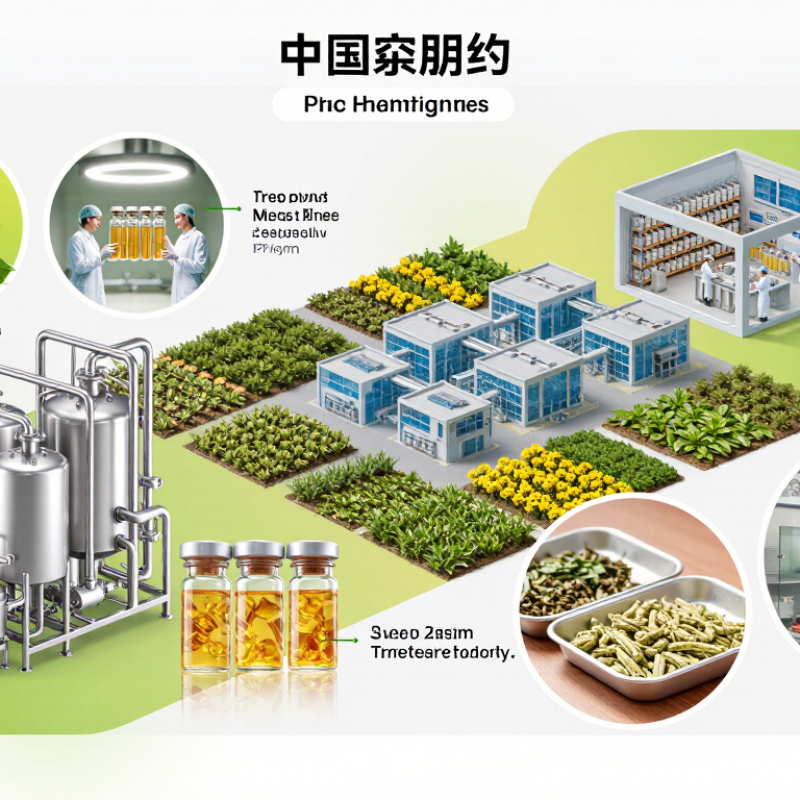
Cold-Extracted Botanical Ingredients: Definition and Core Characteristics
Cold-extracted botanical ingredients are plant-derived materials processed with limited heat exposure. Common methods include cold pressing, low-temperature maceration, and selected supercritical extraction. The objective is practical: reduce thermal stress on sensitive compounds, aromas, pigments, and natural lipids. However, “cold extracted” is not a universally fixed technical term. Responsible manufacturers should state extraction temperatures, solvents, processing time, and raw material origin.
In China, qualified botanical ingredient manufacturers often work with herbs, flowers, seeds, fruits, and roots from different growing regions. Their technical strength depends on more than modern equipment. It includes botanical identification, controlled drying, hygienic production, and batch-to-batch testing.
A fresh seed may produce a bright, nutty oil, while poorly stored material can show stale notes. Small details matter.
Quality Considerations
Cold extraction may help preserve a plant’s natural profile, but it does not guarantee superior performance. That assumption needs review. Oxidation, moisture, microbial contamination, and seasonal variation can still affect quality.
Reliable suppliers use traceability records, contaminant screening, stability checks, and clear specifications for active markers. Buyers should examine certificates, laboratory methods, and storage guidance instead of trusting a process label alone. Good documentation is often less visible than the ingredient itself, yet it supports safer formulation decisions.
Cold Extraction Methods Used in Botanical Ingredient Production
China Top Cold Extracted Botanical Ingredients Manufacturers
Cold extraction protects delicate botanical compounds by limiting heat exposure. In China, manufacturers commonly use cold pressing for seeds, peels, and aromatic plant materials. The raw material is cleaned, inspected, and processed below temperatures that may damage volatile components. The pressing chamber must remain cool during operation. Otherwise, friction can raise the temperature unexpectedly.
Low-temperature maceration is another practical method. Plant material rests in food-grade ethanol, glycerin, or water under controlled conditions. Operators monitor temperature, extraction time, solvent ratio, and light exposure. Some facilities use vacuum-assisted systems to reduce oxygen contact. Supercritical carbon dioxide extraction can also target certain oils and lipophilic compounds. It requires precise pressure and temperature control. The equipment is expensive.
Quality depends on more than extraction technology. Reliable manufacturers document botanical identity, harvest origin, drying conditions, and batch movement. They may test marker compounds using HPLC or GC analysis. Microbial limits, pesticide residues, heavy metals, and solvent residues also require verification. A clear certificate of analysis should match the actual batch.
Cold processing sounds gentle, but it is not automatically superior. Lower temperatures can reduce extraction speed and yield. Water-based methods may also create stability problems. I have seen technical decisions become too focused on “natural” claims. That can hide weak testing. Good production needs measured data, trained operators, and honest limits. Small temperature changes can matter.
Key Standards for Evaluating Chinese Botanical Ingredient Manufacturers
China Top Cold Extracted Botanical Ingredients Manufacturers
Evaluating a Chinese botanical ingredient manufacturer requires more than checking a polished website. The WHO Global Report on Traditional and Complementary Medicine 2019 states that 88% of WHO Member States acknowledge traditional medicine use. That scale increases the need for controlled sourcing, documented identity, and consistent safety testing. Ask for farm locations, harvest dates, plant parts, and supplier approval records. Vague answers are warning signs.
Cold extraction can protect sensitive compounds, but “cold” is not a complete quality standard. Review extraction temperature records, processing time, solvent specifications, and storage conditions. A reliable manufacturer should provide batch-specific certificates of analysis, including botanical identity, marker compounds, microbial limits, heavy metals, pesticide residues, and residual solvents. ISO 22000-based food safety systems can strengthen controls, while independent laboratory testing adds useful distance from internal claims.
Traceability matters during a recall. Request a sample batch code and follow it back to the field. Check whether specifications match your destination market, because compliance requirements differ across regions. The 2024 botanical extracts market analysis by Grand View Research reported continued global growth, but rapid growth may also encourage rushed qualification. I would not accept a certificate alone. Audit the facility, compare three batches, and inspect retention samples. No audit is perfect. My own hesitation would remain if test methods, detection limits, or stability data were missing.
China Top Cold Extracted Botanical Ingredients Manufacturers - Key Standards for Evaluating Chinese Botanical Ingredient Manufacturers
| Evaluation Dimension | What to Verify | Relevant Standard or Evidence | Recommended Acceptance Criteria | Suggested Weight |
|---|---|---|---|---|
| Legal Registration and Scope | Confirm that the manufacturing entity is legally registered and that its business scope covers the supplied botanical ingredients or food-related products. | Valid Chinese business registration information, manufacturing permits where applicable, and documented product scope. | Legal entity, production site, product category, and certificate holder should be consistent across commercial and quality documents. | 10% |
| Food Safety Management | Assess the factory’s hazard analysis, critical control points, sanitation controls, allergen management, foreign-material control, and corrective-action system. | HACCP principles, ISO 22000, or FSSC 22000 certification with a valid scope and surveillance status. | A documented and implemented food-safety system supported by internal audits, management review, and corrective-action records. | 15% |
| Quality Management System | Review document control, change control, deviations, complaints, nonconforming-product procedures, and supplier approval processes. | ISO 9001 certification or equivalent independently audited quality-management system. | Controlled procedures should cover purchasing, production, testing, release, storage, distribution, and customer complaints. | 10% |
| Definition of Cold Extraction | Determine how the supplier defines “cold extracted,” including extraction temperature, residence time, solvent system, pressure, and heat exposure during concentration and drying. | A controlled process specification and batch records. There is no single universally applicable international temperature limit for all botanical cold-extraction products. | The supplier should state measurable temperature limits and demonstrate that the process consistently meets them. | 12% |
| Raw-Material Identification | Verify botanical identity, plant part, geographic origin, harvest period, processing status, and protection against substitution or adulteration. | Approved botanical specifications, supplier qualification records, macroscopic or microscopic identification, and botanical or DNA testing where appropriate. | Every incoming lot should be traceable to an approved source and confirmed against an established identity specification. | 12% |
| Active Marker and Batch Consistency | Check whether the product is standardized to a declared active compound, marker compound, extract ratio, or other meaningful quality parameter. | Approved product specification, validated analytical method, chromatographic fingerprint, and batch-release results. | Acceptance limits should be defined before production and applied consistently to pilot, commercial, and repeat batches. | 12% |
| Contaminant and Residue Control | Evaluate testing for pesticides, heavy metals, mycotoxins, microbial contamination, foreign matter, and residual solvents when solvents are used. | Applicable Chinese food-safety limits, destination-market requirements, Codex references where relevant, and validated laboratory methods. | Each lot should meet the agreed specification, with risk-based testing frequency and documented laboratory results. | 15% |
| Analytical Laboratory Capability | Assess laboratory independence, analyst competence, equipment calibration, method validation, reference standards, and data integrity. | ISO/IEC 17025 accreditation for applicable tests, or qualified third-party laboratory reports for tests not performed internally. | Certificates of analysis should identify the tested batch, method, result, specification, laboratory, analyst approval, and report date. | 8% |
| Traceability and Recall Readiness | Test whether raw materials, processing records, packaging materials, finished batches, and customers can be linked through a documented lot system. | One-step-back and one-step-forward traceability records, mock-recall documentation, and written recall procedures. | The manufacturer should be able to identify affected lots, quantities, shipment destinations, and corrective actions without relying on informal records. | 6% |
| Process and Equipment Control | Review equipment suitability, cleaning validation, calibration, temperature monitoring, prevention of cross-contamination, and maintenance controls. | Validated or qualified process parameters, calibration records, sanitation logs, preventive-maintenance records, and batch manufacturing records. | Critical parameters must be monitored, recorded, reviewed, and linked to product-release decisions. | 8% |
| Packaging and Storage Stability | Verify packaging suitability, protection from oxygen, light, moisture, and contamination, as well as warehouse conditions and shelf-life justification. | Packaging specifications, storage-condition records, stability or retain-sample program, and clearly defined expiry or retest date. | Packaging and storage conditions should be appropriate for the ingredient’s moisture, oxidation, light, and microbiological risks. | 5% |
| Documentation and Export Support | Check availability of specifications, certificates of analysis, safety data sheets, allergen statements, non-GMO declarations, origin documents, and export records. | Controlled technical dossier aligned with the destination market and intended application. | Documents should be current, signed or electronically approved, consistent with the shipped product, and available in English when required. | 5% |
| Total Evaluation Weight | 100% | |||
Major Product Categories and Industrial Applications
China Top Cold Extracted Botanical Ingredients Manufacturers
China’s cold extracted botanical sector covers several practical ingredient categories.
Cold-pressed seed oils include camellia, flaxseed, pumpkin seed, and raspberry seed oils. Low-temperature botanical concentrates preserve selected aroma compounds and lipid-soluble constituents. Glycerin-based extracts offer another option for water-based formulas. Each category needs different storage and testing controls.
Cosmetic manufacturers use these ingredients in facial oils, creams, scalp products, and cleansing systems. Food producers may apply suitable edible oils in dressings, nutrition bars, and powdered blends. Supplement developers often require standardized botanical extracts with clear identity and batch records.
Industrial buyers should review extraction temperature, solvent use, allergen statements, microbial results, heavy-metal testing, and oxidation data. A clean appearance is not enough. It can hide instability.
Tips:
Request a recent certificate of analysis and a representative sample. Compare peroxide values after transport, not only at dispatch. Confirm botanical species, plant part, and harvest region.
Check packaging for light and oxygen protection. In practice, the perfect ingredient rarely exists. A supplier may provide strong purity data but limited long-term stability evidence. That gap deserves questions.
Pilot trials should measure odor, color, viscosity, compatibility, and shelf life under realistic factory conditions. Small details matter.
China’s Leading Cold-Extracted Botanical Ingredient Manufacturers
China’s leading cold-extracted botanical ingredient manufacturers are strengthening their role in global natural ingredient supply. Low-temperature processing helps protect volatile aromas, polyphenols, pigments, and other heat-sensitive compounds. This matters in botanical ingredients for food, cosmetics, and wellness applications.
The opportunity is substantial. Grand View Research’s 2024 Botanical Extracts Market report projects strong global growth through 2030, supported by demand for plant-based formulations. The World Health Organization reported that 170 of its 194 Member States acknowledged the use of traditional medicine. These figures support China’s expanding manufacturing expertise and export capacity.
Experienced manufacturers now combine controlled extraction with farm-level traceability. They record harvest locations, drying temperatures, extraction parameters, and batch yields. Modern laboratories test botanical identity, microbial limits, pesticide residues, heavy metals, and solvent residues. High-performance liquid chromatography can also verify marker compounds. Documentation is essential.
But a cold-extracted label proves little by itself. Some suppliers still provide weak evidence for stability or absorption. This remains a concern. Reliable manufacturers should offer specification sheets, certificates of analysis, retained samples, and auditable quality systems. They should also explain carrier oils, extraction media, and storage conditions clearly. The process is not flawless. Natural variation between harvests can change color, aroma, and active-marker levels. Careful manufacturers acknowledge this variation instead of hiding it.
China Top Cold Extracted Botanical Ingredients Manufacturers
Typical oil-content midpoints for botanical seeds and fruits commonly used in cold-extracted ingredient production.
Values represent approximate typical oil-content midpoints reported for the raw botanical materials; actual cold-press recovery varies with cultivar, moisture, conditioning, and pressing parameters.
FAQS
Common types include camellia, flaxseed, pumpkin seed, and raspberry seed oils. Low-temperature concentrates preserve selected aromas and lipid-soluble compounds. Glycerin-based extracts suit many water-based formulas.
Cosmetic makers use them in facial oils, creams, scalp products, and cleansing systems. Suitable edible oils may enter dressings, nutrition bars, and powdered blends. Supplement developers often need standardized extracts and batch records.
Lower temperatures can help protect volatile aromas, pigments, polyphenols, and other heat-sensitive compounds. The result may better preserve the ingredient’s original character. It is not magic.
Request a recent certificate of analysis and a representative sample. Useful records include specifications, batch details, retained samples, and quality-system evidence. Ask for botanical species, plant part, and harvest region.
Review botanical identity, microbial limits, pesticide residues, heavy metals, and solvent residues. Marker compounds may be checked using high-performance liquid chromatography. Oxidation data also matters, especially for seed oils.
Check whether packaging protects the ingredient from light and oxygen. Compare peroxide values after transport, not only at dispatch. Store materials under documented temperature conditions. Small details matter.
Yes, harvest differences can change color, aroma, viscosity, and active-marker levels. Drying temperature and extraction settings may also affect consistency. A supplier should explain this variation honestly.
Test odor, color, viscosity, compatibility, and shelf life under realistic factory conditions. Review the ingredient after transport and processing. Perfect evidence is rare. Some stability gaps need further questions.
Conclusion
Cold-Extracted Botanical Ingredients are plant-derived materials produced through low-temperature extraction processes designed to preserve delicate compounds, natural aromas, colors, and functional properties. Unlike high-heat methods, cold extraction can help reduce thermal degradation and maintain a closer balance to the original botanical profile. Common techniques include cold pressing, solvent-free mechanical extraction, maceration, and other carefully controlled processes selected according to the plant material and intended application.
This article explains the key standards for evaluating Chinese manufacturers, including raw material traceability, extraction consistency, quality testing, facility management, documentation, and compliance with applicable safety requirements. It also reviews major product categories such as botanical oils, extracts, powders, and active plant fractions, along with their uses in food, beverages, cosmetics, personal care, and wellness products. The final section outlines how leading manufacturers distinguish themselves through research capabilities, scalable production, customization services, sustainable sourcing, and reliable supply-chain management.

Blog Tags: